
Let’s Discuss the New Rules for Outdoor Advertising - From Analytics to Adaptive Scheduling
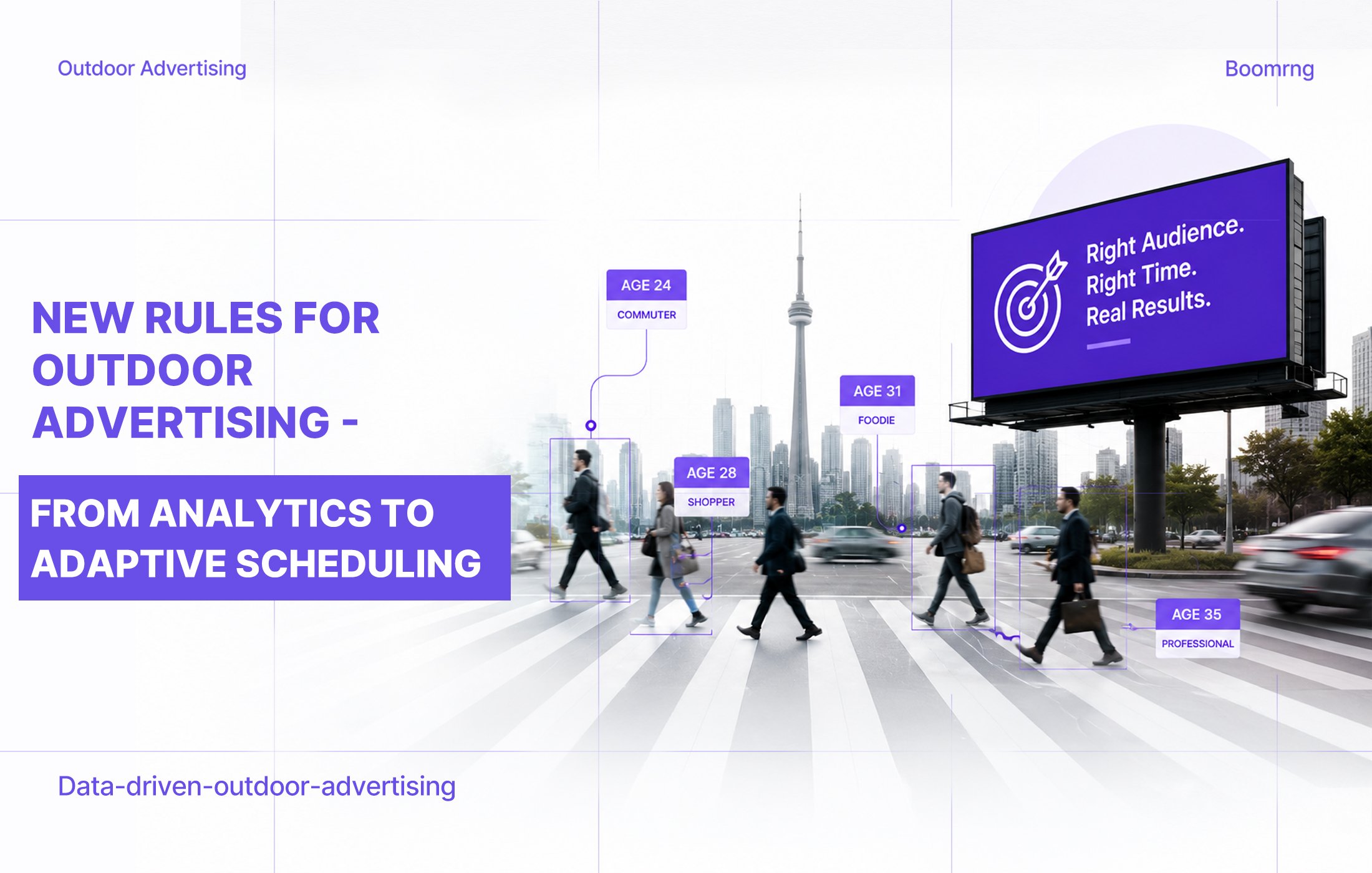
There was a time when buying a billboard meant picking a busy road, printing a design and hoping the right people drove past it.
That era is over.
Outdoor advertising in 2026 is as much a data discipline as it is a creative one. The brands seeing the strongest returns are not the ones with the biggest creative budgets. They are the ones using location intelligence, audience analytics and adaptive scheduling to make every impression count.
What Does Data-Driven Outdoor Advertising Include?
In a traditional OOH buy, a brand picks a location based on assumed traffic volume and gut instinct about who lives nearby.
Data-driven outdoor advertising leaves no space for doubt.
Verified mobility data, audience demographic overlays and real-time foot traffic analysis now tell advertisers not just how many people pass a screen, but who they are, what time of day they travel and what they are likely to do next.
For a Canadian business deciding between two screens on the same corridor in Calgary or Toronto, that audience data is the difference between building qualified local reach and buying general exposure at a similar price.
Brands that plan their Canadian outdoor placements with Boomrng access location-specific audience intelligence before a single dollar is committed to a screen.
How DOOH Analytics Helps Your Campaign?
DOOH analytics have moved outdoor advertising from a medium you buy, and hope performs, to one you actively optimise during a live campaign.
Here is what that looks like:
Dwell time measurement tells you how long your audience is actually exposed to a screen. A driver stopped at a red light for 45 seconds processes a billboard very differently from a pedestrian walking past. Screens with higher dwell times deliver more cognitive exposure per impression, not just more impressions.
Audience demographic overlays pull from aggregated mobile device data to tell you the age range, income bracket and lifestyle profile of the people regularly passing a given screen. For any brand running smart billboard advertising in Canada, this ensures more precise audience targeting and media planning.
Conversion attribution closes the loop that outdoor advertising traditionally left open. Using unique URLs, QR codes and branded search volume tracking, DOOH analytics platforms now measure the downstream effect of an outdoor campaign on web traffic, store visits and sales. IAB's 2025 DOOH Measurement Guide confirms brands using these attribution frameworks report 20% to 30% more accurate ROI figures than those relying on impression estimates alone.
Brands that want to build their first data-informed campaign with Boomrng can set up audience targeting, screen selection and attribution tracking before launch, not after.
Adaptive Scheduling and Why Timing Is Now a Strategic Decision
Adaptive scheduling means aligning your outdoor creative and screen activity with the exact moments your audience is most receptive.
Outdoor advertising analytics make this possible by surfacing peak traffic periods, audience shifts by time of day and contextual triggers like weather, local events and commuter patterns.
A food brand serving a breakfast crowd and a dinner crowd is running two different conversations with the same people. Adaptive scheduling lets them do both on the same screen without paying for two separate placements.
Weather-triggered content is one of the most proven applications. A beverage brand running cold drink creative only when temperatures exceed 25 degrees concentrates spend during commercially relevant moments and eliminates waste during mild weather. According to WPP's 2025 Global End-of-Year Forecast, programmatic DOOH using adaptive scheduling reduces CPM by up to 25% compared to static manual buys.
In Canada, where seasonal behaviour shifts are dramatic and predictable, this advantage is built into the geography itself.
How to Measure Outdoor Advertising ROI?
How to measure outdoor advertising ROI is the question every business owner asks before their first campaign and struggles to answer after it.
The problem is not the medium. It is the lack of planning before the campaign launches.
Four measurement tools that produce reliable outdoor ROI data:
Unique URLs on creative track direct traffic from a specific screen. A URL like yourbrand.ca/summer tells you exactly how many people typed it after seeing the board.
QR codes on digital screens capture high-intent engagement. Anyone scanning a billboard QR code is a more deliberate prospect than someone who clicked a social ad by accident.
Branded search volume monitoring reveals awareness lift that requires no direct action from the viewer. A well-placed outdoor campaign consistently produces a measurable uptick in branded Google searches during the campaign period.
Mobile foot traffic analysis uses aggregated device data to measure whether people exposed to your screens visited your physical location. For retail and hospitality brands, this is the most direct ROI signal available.
The weekly performance review at Boomrng covers reach, impressions and screen-level performance data across BC, Alberta and Ontario.
Run a Smarter Outdoor Campaign with Boomrng
The shift to data-driven outdoor advertising does not require a national media budget. It requires the right screens and a team that knows how to use the data.
Boomrng works with small and medium businesses across BC, Alberta and Ontario to identify placements based on real audience data, get campaigns live within 48 hours and deliver weekly performance reporting with no long-term contracts.
If this is your first campaign with Boomrng, your first ad creative is designed at no charge.
Map out your first smart outdoor campaign with Boomrng today!